
Writing creatively can sometimes feel like a chore, something to be done when everything else is done. It can feel like a luxury, something you might do when inspiration strikes, yet it never seems to strike. Writing takes time, which is one of our most valuable resources, and there can be various reasons why we can’t manage our time to fit in writing.
There are at least twenty-four obstacles in our way, things that distract us or stop us from getting down to the business of writing. In this article, I’ll go through these different time-blocking issues and give you ways to overcome them so you can get productive and back into your writing.
What is Time Management?
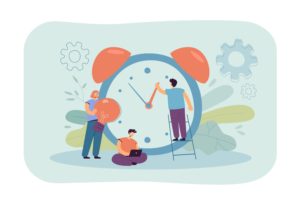 Time management is the art of organising yourself to complete tasks efficiently and effectively. It is dedicating yourself to doing a job and focusing on that job without distractions. Time management is the use of mental preparation, tools and techniques to work with the time you have in such a way that you’re not left feeling stressed, anxious, regretful or overwhelmed.
It is a soft skill that has a high value in office culture and in your personal life. While there is no official training you can do, there are techniques you can learn and tools you can acquire to help you.
What are Some Time Management Problems?
Procrastination
This is arguably the biggest culprit for time management issues. Some reasons we procrastinate are fear of failure, lack of motivation, anxiety or fear, and a belief that you must be perfect so you can never start. There are a multitude of reasons we procrastinate, and often when we look at those reasons, we think- is that all? I should be able to conquer those. I will just watch one more reel, or read just one more chapter of this fanfiction.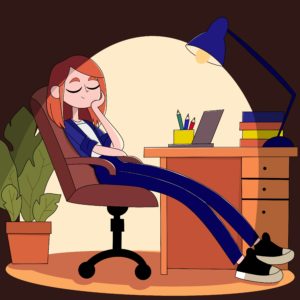
Overcoming Procrastination- There are some ways to break down procrastination and get yourself mentally moving again.
- Break down large tasks. How do you eat an elephant? One mouthful at a time. So break down what you have to write into smaller chunks. Write that one scene. Write them to that destination. Just write 400 words.
- Accept ‘good enough’. You cannot edit a blank page, as they say. So get your words down and don’t try and be perfect the first time through. Odds are, if you’re afraid that it isn’t good enough then, in your mind, it never will be. So get the words down and then work on it until it is good enough.
- Sharing your burden, telling someone about your goals, body doubling as you write, these things can get you motivated and moving.
Multitasking
Did you know that it’s not actually multitasking but micro-tasking? You cannot effectively do multiple tasks at the same time, especially not creative tasks. You need to invest your mental energy into one project to get any value out of it. I have found the first five minutes of writing to be the hardest. Once I am over that hump, I focus and get more value out of the time.
 Overcoming Multitasking- The fewer distractions you have and the less there is on your to-do list, will help combat your multitasking.
- When you’re switching between tasks it’s because you don’t know which is the most important. I will check emails, respond to that text message and then get back into writing. Why not check and resolve your emails, and close the email client until the top of the hour? Reply to that text and turn the phone to silent and wait twenty-five minutes before checking again?
- Learn to say NO. Someone just wants some help with this? No, I am busy, can it wait? We add small tasks to our list of things to do now because we say yes. It is perfectly okay to say no. I give you permission to say no.
- Eliminate distractions. Shut down social media, put your other devices out of easy reach and switch them to silent. Have enough snacks to last you for an hour. Have the sole focus being your writing. Turning your laptop to airplane mode is also a good idea. No quick slipping into social media to check the latest.
Distractions
This feels obvious when you think about it, but it is quite easy to be distracted. And like many of the time management issues on this list, they are interconnected. Before I write, I need to make a coffee. So I get up away from the desk to make one. Then wait at the kettle, wander back and just check what is on the TV. Oh, hey, text from my mum. More than half an hour has passed,and I have been distracted and am procrastinating from going back to write. So I turn the TV off, stand up, and decide my coffee is cold. It needs a top-up. And I need cookies.
Overcoming Distractions. There are a few ways you can overcome distractions. This type of block really needs discipline to work through, so you can focus.
- Take regular breaks. Sometimes we get distracted because we’ve been pushing the brain for too long, and it wants to wander. So let it, but on your terms. Set a timer, focus, and then take a break.
- The Pomodoro Technique. To help with the above, use the Pomodoro technique. Set a time for twenty-five minutes, focus and do your writing, and then rest for five minutes. Check your notifications, listen to a song, get another pot of tea going. Then sit down for another twenty-five minutes.
- Identify your distractions. Make a list of what your distractions are, and be brutally honest about them. Only you will see them, unless you share them with an accountability partner. Then go through and eliminate them the best you can. Knowing your weaknesses is actually a strength.
- Create a distraction-free environment. This may be tricky, especially if your study is as chaotic as mine, with all these cool books on the shelf just dying to be read. A library can be distraction-free. Yes, there are books, but they’re not yours, and often you need to be quiet in a library. Or you could find a nook in your house away from things, drag over a chair and a desk, put on some sound-cancelling headphones and get to it.
Perfectionism
This was mentioned above as a source of procrastination, but it does deserve its own investigation. We can waste time fixing things or making things better. How often do you need to edit that one chapter to get it just right? Usually not as often as you’ve edited it so far. You can get lost down the pothole of – if I can’t make it perfect, what is the point of continuing? That is a bad place to be.
Overcoming Perfectionism- shifting your mindset is the best way to help you overcome this block.
- Progress, not perfection. Try to get to good enough, and recognise that this is progress towards the awesome finished product.
- Reframe your mistakes as learning opportunities. We all make mistakes as we learn and grow; no one is perfect from the outset. Understand this. Realise that you’re learning and growing as a writer, so of course it won’t be perfect.
- Practice self-compassion. Don’t be so hard on yourself. Be kind to yourself. If a friend showed you a piece of their work and they felt it was terrible, but you just read something amazing, how would you feel? How would you react? What would you say to your friend? Okay, now say that to yourself.
Lack of Prioritisation
For some, writing and being creative is just not that high on their list of importance. Doing housework or gardening or something else always seems to pip the priority stakes. Why? Why is scrubbing the toilet more important than getting something written that comes from the heart? Is it because you don’t consider it serious?
Overcoming lack of prioritisation- You need to believe that writing, being creative is important to you. There are mental health benefits to being creative and physical health benefits to being creative. I hope this helps you prioritise your health through creativity!
- Learn to say ‘no’. If you say yes to everything or everyone, when they offer you a second option other than being creative, then you are not prioritising your writing. Learn to say- no, I am writing, I will do it later.
- Don’t multitask. As mentioned before, multitasking is actually microtasking, doing one thing and then another, in little bursts. Focus on one thing. Focus on your writing, and put the rest aside for a while.
- Don’t do ‘busywork’. Some people think writing is relaxing and sitting still. They feel they need to be busy, doing something, so will push writing down the list until there is a quiet time to do it. A lot of the time, the busywork is not important work. Writing is important.
Being busy but not being effective
Following on from that last dot point, in this world of measuring self-worth by production and output, people feel the need to be busy. If you’re not working on something, doing chores, being busy, you’re wasting time. Being creative, writing, is not a waste of time. In its own way, it is also busy time, mentally busy time.
Overcoming being busy- You need to understand what you want to achieve, get clear about how you will achieve this, and stick to the plan.
- Time-block for your task. Utilise a calendar, block out two hours to do your task. Give yourself two hours to write. Don’t do anything else, or schedule other tasks around that two hours if you still feel the need to be ‘busy’.
- Delegate if you can. If there is work that needs to be done, ask others if they can do it, and delegate responsibility. Often, this may require bribery in the way of snacks, but this is acceptable.
- Learn to say ‘no’. Can you help me with this? It will just take five minutes. No, I am writing. Once my two hours of writing is done, then I can help you. It is okay to say and do this and establish some boundaries.
Easily Distracted
In the time of always online, hyper-connectivity, it is amazingly easy to be distracted. The phone buzzes, crying for attention. So many push notifications, social media feeding us reels and videos and so much. You’ll just look at your feed for a moment and then get back to writing. We all know that doesn’t happen. This does not include real-world distractions, like a cat begging for food, or your stomach rumbling or children wanting to show you what they just painted on the walls. You hope it washes off.
Overcoming being easily distracted- You need to remove the things which distract you, or remove yourself from a place that is full of distractions. If you know that you are one who has this problem then you need to be disciplined, hard on yourself. The reward for such vigilance is well-invested time into your creativity.
- Turn your phone to silent. This extends to anything that makes a noise when notifications are received. Silence them all. Turn off the Wi-Fi if you need, but silence those notifications.
- Resolve to concentrate. If you’re easily distracted by your cat, or by the birds in the trees, then you need to create habits that remove these distractions. Your cat will welcome you back in a couple of hours, the birds will return, don’t worry. This is a habit you need to break.
- Try the Pomodoro technique. This works well because it gives you permission to be distracted for five minutes. Set a timer for twenty-five minutes, and focus. Then, when the timer goes off, relax, check the socials, play with the cat. Get that need to be distracted out of your system, and then set the timer up again and go for it.
I will give you some more time management issues and solutions in part 2 of this series.
Written Off Writing is a writing community with groups and activities designed to help you be creative and productive. We use the Pomodoro technique to get you writing effectively. You have some casual accountability by writing with other people who are supportive of your efforts. Plus, it is short writing sprints, so you don’t have to invest hours and hours and weeks into your novel. Write an idea, develop it, and then do it again.
If you think this fits who you are as a writer, find us on Patreon and join us for as little as $8 a month.