This is the third and final instalment in my time management series, where I look at ways writers and creators spend time unwisely, and the ways we can overcome and conquer these procrastinators. The first article you can find here, and the second part of the series is found here. There seem to be many different ways that we can sabotage ourselves as writers. I was literally sitting here scrolling through, stuff when I remembered I had this article to write. While I may be writing this series ,I am not immune to the topics I cover. A few of the issues I raise in this third article are ironic since you had to get through 2 other articles to get here, and it is a new year, and we’re all feeling it from the old year. So without further ado, since we have more than enough ado, let me get into it.
Low Energy Levels
 It takes a lot of mental energy to be creative. With writing, often people need to think about what they’re going to write, the plot, the characters, how their characters speak and relate to each other. This can feel tiring, a massive effort to get yourself into the mental headspace.
In other ways, you need energy to be creative. Preparing an awesome meal, or physically drawing or painting, getting your gear out ready to go, it can all seem a bit too much when you’ve had “A Day”.
Overcoming Low Energy Levels. This requires a good mix of lifestyle and diet changes. A good amount of rest, naturally, but also WHEN you take that rest is important. 8 hours of sleep at night is great, but the more hours before midnight the better. A balanced diet, which avoids spikes in sugars and caffeine, because after a spike inevitably comes a crash.
- Exercise and Hydration. While you may think that doing exercise makes you tired, it can actually begin to give you more energy. Regular exercise helps improve your sleep, can reduce stress, and gets your mind going. You can use the time to listen to podcasts or audiobooks, which also feeds your creativity. And of course, exercise drains your body of fluid, so stay hydrated.
- Eat regularly. We’ve been brought up on 3 meals a day, and then we snack. It is often a good idea to have 6 smaller meals throughout the day to maintain an energy level rather than a big meal, which spikes you and then you crash before the next big meal. And make those smaller meals healthy with iron-rich foods, fruits and proteins. Disclaimer. I am a writer, not a dietician, so take my advice and my pun with a grain of salt. Consult an expert if you need.
- This is different to a good night’s sleep. Sometimes we just need to rest. We may push ourselves to be creative, but does that give you a good result with your creativity? I have a full time job, so the only time I can write is after hours and on the weekends. However I have been tired a lot after work as we’re getting back into the New Year and this is the first time I’ve done 5 days in a row in the office, with a 90 minute commute home. I am waiting for my brain to get used to it before I start to get writing again. I am giving myself permission for some creative time off.
Anxiety
This issue hits time management in the same way that our fear of not being perfect does, or very similar. Anxiety can stir up in our minds for a variety of different reasons. We want to write but don’t know how to write and can’t come up with ideas so we must be a fake and what am I going to do? We might get anxious because we wrote something awesome last time so how can you write something just as good this time? Anxiety about not being good enough, about people not liking what you wrote.
It is a big word, a word that encapsulates so much energy and frustration and immobility.
Overcoming Anxiety for Writers. I felt I had to specify about anxiety for writers because I could hardly claim to be able to help you overcome general anxiety. But there are things you can do, exercises you can take and shifts in your mindset that can help your writer’s anxiety quieten down and let you get on with the creative process.
- Shift your mindset. Sometimes the anxiety comes from your lack in self-belief that things must be perfect and if they’re not then they must be terrible. Newsflash. Nothing you write will ever be perfect. The Lord of the Rings is not perfect. Yeah, I said it. The idea of perfection is flawed. I’m sure Leonardo da Vinci would want to touch up the Mona Lisa even to this day.
Know what you’re good at. I love first drafts, hate the editing and rewrites, so I am working on that, knowing that they grind me down. But I understand it and recognise it, so while it takes a lot for me to begin the process, I know why it does. - Actionable tasks. Break down the big task of writing a novel, into smaller, less scary ones. Write a scene, write a chapter. I’ve mentioned before about shifting the idea of X number of words into X amount of time in the novel, this helps. It’s also a good idea to write smaller projects around your bigger one, so you feel more confident walking in the world. I believe the best world-building is done through short stories. So if you’re anxious about the bigger picture, write around it.
- Support Network. It’s good to have a network around who you can help. Talking it out with friends, seeking honest feedback that is constructive and is about your work, not you as a person, helps. Find resources that help you. Writing groups, organisations and so forth. Sometimes, writing with other people helps, because they’re in the same boat as you.
Anxiety in all creative arts is terrible. As a professional writer, everything I write for a client is being judged. Because money changes hands, it is being REALLY judged, and feedback will come at me. I’ve often pondered why people would want to be writers when everything you do is judged by other people, and some of them are not nice. But I have shifted it to the work, not me. I can always rewrite, make adjustments, it’s okay. I have written enough good stuff that it is rarely a reflection on me.
Lacking Organisation
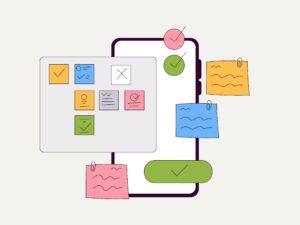 I know plenty of creative people who are disorganised. One of the “fun” things about being creative is how messy you can be and how ideas can come from anywhere. But in truth, being disorganised is a creative burden. I mean, I have a messy desk, but I am more organised in my creative life than ever before. The last thing I want to do is be looking for my creative project for twenty minutes, because by then I have lost the impetus to write.
Organisation includes your filing system. Through hard lessons, I make very sure where I save my files, often by year and month, but also by subject. File names are also very clear.
I organise my other creative projects as well. I have drawers for my miniatures, for my notebooks. My postcard project is bunched into that book there. It makes it less frustrating to find something when I want to be creative.
I always know where my pen is. (Thank you Douglas Adams).
Overcoming a lack of organisation. Luckily being organised is a simple thing to adopt and it has such huge positive impacts on the rest of your creative life, and regular life, I guess.
- Develop a File-Naming System. Consistency is key, and it also helps you know what draft you’re on. I picked this tip up when I was working for a billing company writing reports. I’d never thought something so uncreative would be used in my creative life, but it works. I know where my novel chapters are and what version, I know where my shorts and my drabbles are based on year and title.
- Organise smallest to largest. I like this idea because if I am in the mood to work on a smaller project, there it is. If I have the spoons to work on the novels, there they are. This theory is also good for to.do lists. You feel good, you get a surge of the happy chemicals when you cross off something on your list. Crossing off three small things can help give you energy to cross off a larger one.
- Filing and Labels are good. If you have creative projects besides writing, labelling is good. Filing, or putting them back in the same place is good. Spending time rifling through drawers or piles of paper is bad, and frustrating. By the time you’ve found what you want, you are highly likely irritated and frustrated and not in the right headspace to be creative. These labels and filing apply to your online filing. Much like above with the file-naming system, you can label folders appropriately, and organise your filing system online.
I will freely admit that administration is not one of my strengths, and even now sometimes my filing can be dodgy, or I will spend five minutes trying to find my journal which I swear was in this drawer here, but no, I put it on the bookshelf and then piled something on top of it. Work out a logical system that works. Leave the creativity to the page or the canvas.
Burnout
The last issue that impacts time management that I want to address is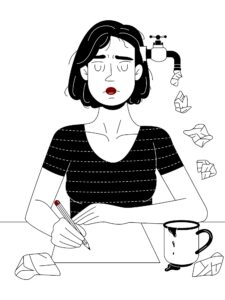 burnout. Creative burnout can be so frustrating. You want to be creative, do some art, but you just don’t know what, or how or why you should at all. Sometimes you’ve been doing your writing for so long, that you burnout, and just don’t have the energy to keep going.
It makes the practice of being creative less joyful, more of a chore. And this frustration at not being able to be creative leads to other issues. anxiety about failure, imposter syndrome, and lack of motivation, low energy, and depression. If you’d put into place time management routines to be creative, it can bring them down as well, which feeds this loop, turns it into a downward spiral.
Other reasons for creative burnout can be that it is your job. The pressure to produce something creative can quickly dry up that well of ideas. External factors such as money stress or job stress can burn you out. Demands on your time. job, family, social, when all you want to do is write, can also be a thing.
Overcoming Creative Burnout. While not something you may want to hear, one of the best ways to overcome creative burnout is to step away from your creative self for a while. It sounds drastic, but you don’t want to risk breaking your creative self and then struggling to bring them back.
- Take a Genuine Break. Enjoy life, go outside and walk in the sun. Schedule real downtime, with good sleep, naps and just doing nothing. It may seem counterproductive and a waste of time, but you need to recharge your batteries not feel like you HAVE to be creative.
- Self-care. You have to take care of your mind and your body. Burnouts are mental, spiritual and physical. Look at your diet, your exercise. Eat well, stay hydrated, and fuel your body and your mind. Sleep well. Don’t stay up late, get a good eight hours of sleep per night.
- Passive Creativity. I call this passive creativity, where you’re reading books, or watching good TV shows or movies. You need to fill up the reserves of your creativity. It is possible your burnout is because you’ve emptied the tanks, so now you must fill them. Reading is relaxing, and you get to see how others do it. Watching TV and movies is the same. If you have to, take notes, digest this media as a writer and get more ideas. Or, just enjoy reading for the sake of reading.
There is a lot of stuff out there that tries to take you away from being creative, and sometimes it is ourselves who try to do this. Some of these things are unavoidable, and I get that, but when it is ourselves and our self-sabotage, then that gives me the irrits.
Honestly, it is something that I am still struggling with. I had on my 2025 Creative Bingo card that I would finish the second draft of my novel, and that didn’t happen. I have reframed it for this year so hopefully some movement will occur on that front.
I hope these articles have helped identify ways you maybe poor at time management, and gave you some inspiration in how to correct it. For me, I use my calendar and I get others involved for some casual accountability. I am also identifying time in my day where I could be doing something other than playing games on my phone, but also realising that gaming on my phone is me taking time out from the grind of. I must do something.
You can let me know if you have other time management issues and solutions. I am always up for feedback and ways to make the creative juices flow more easily. Go out there, unleash your creative self and make something awesome.
If you want a sure-fire way to manage your time and get some writing done, join Written Off Writing’s Patreon. 2 guided writing workshops and a 2 hour window you put aside to write, with a bunch of other people. You turn up, you meet us, and we all write together. It’s awesome!